- Use
- Utility
- Service
- Share
- Stall
- Next
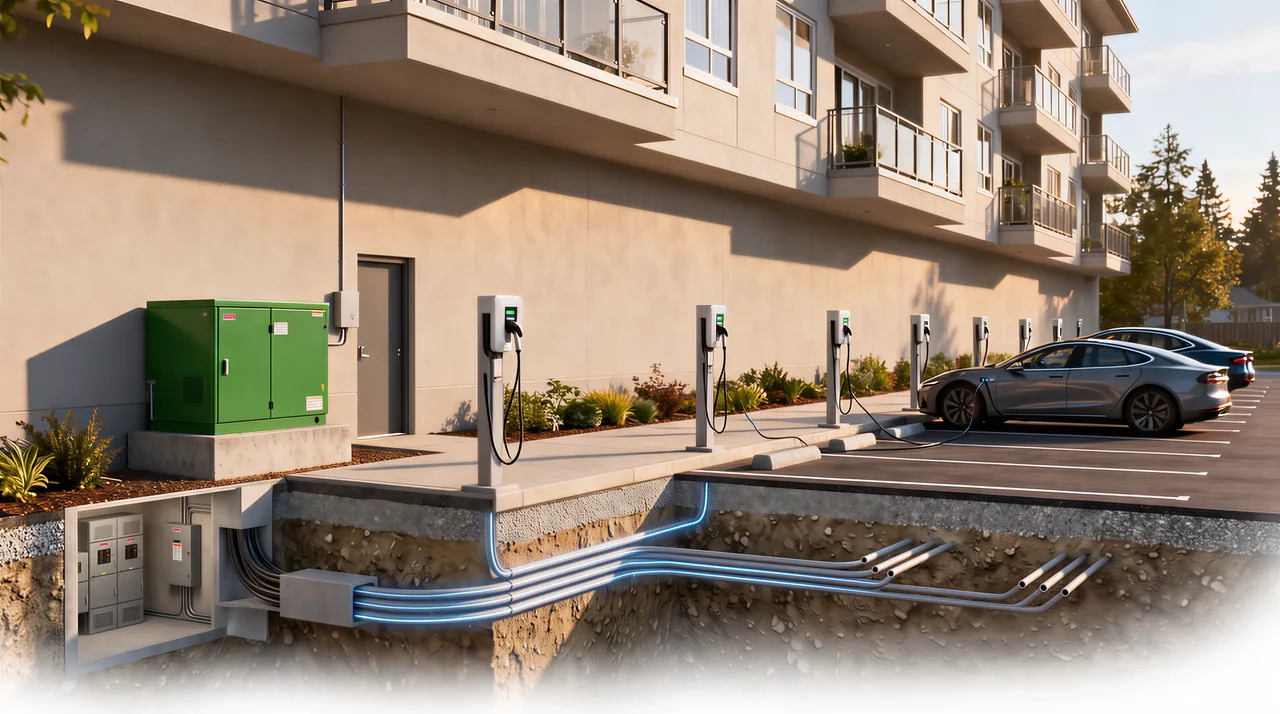
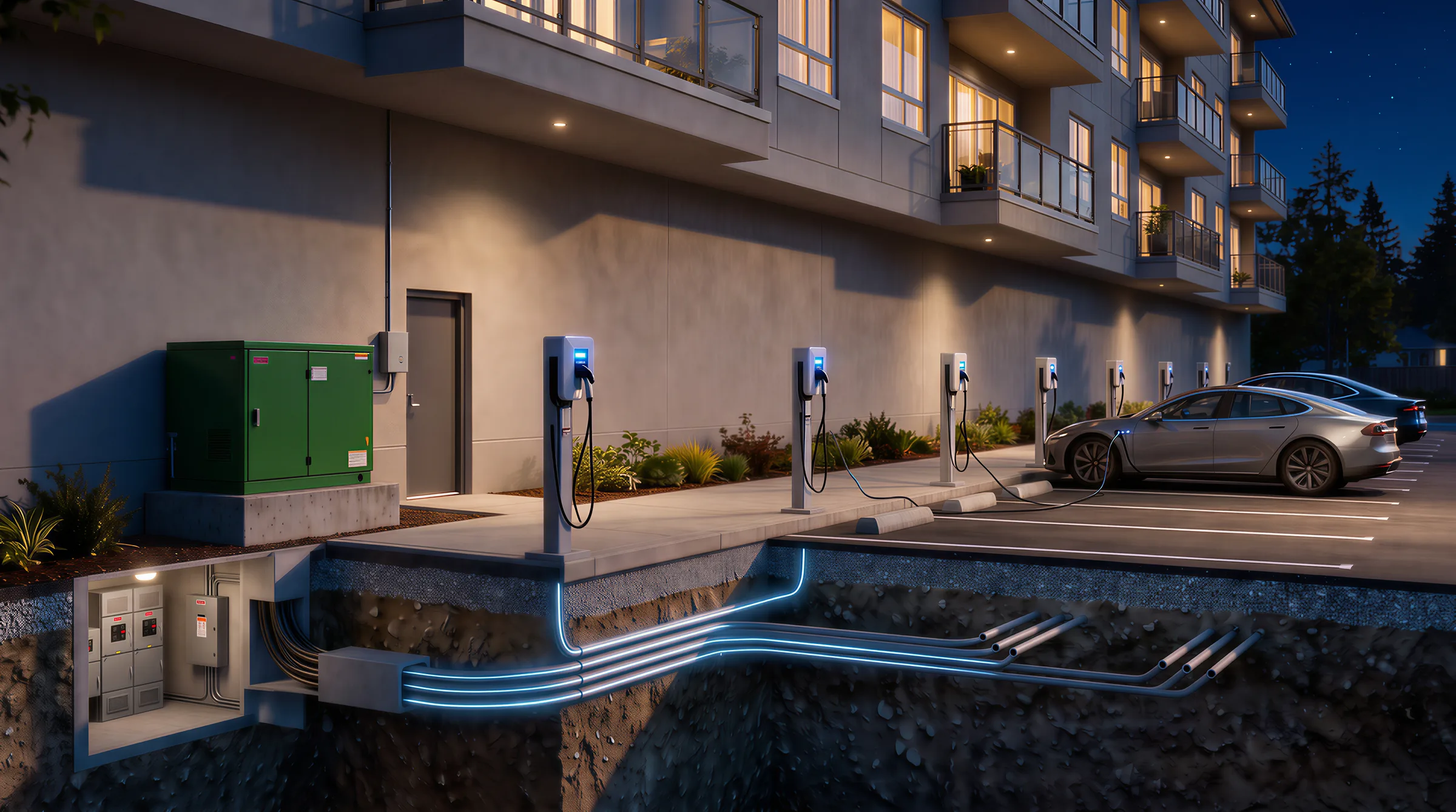
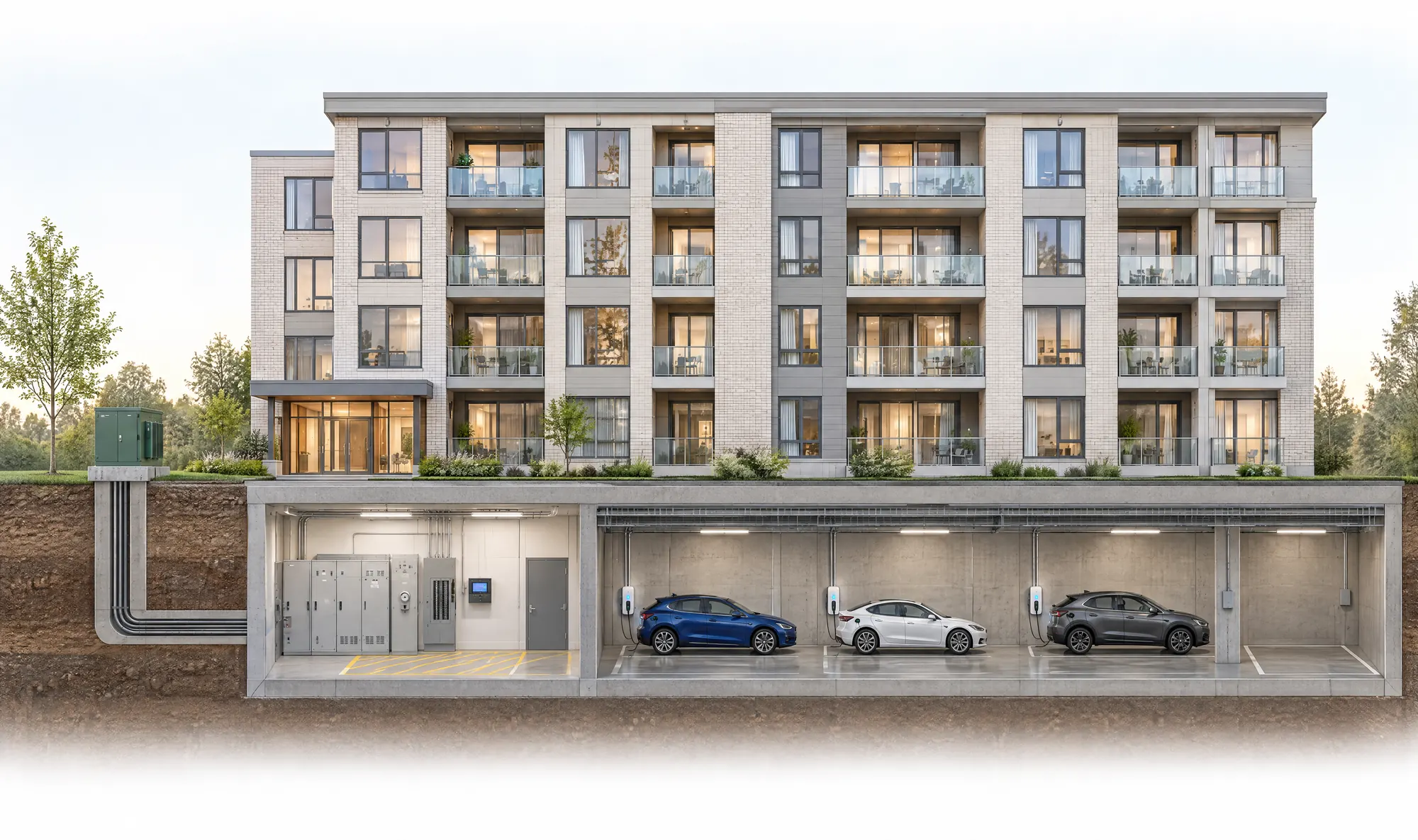
A cutaway of a five-storey apartment building and its underground parkade. A pad-mounted utility transformer on the lawn feeds a service duct bank into the electrical room, where switchgear, metering, distribution and an energy management system share the capacity along a cable tray. Circuits drop from the tray to a charger at each occupied stall, and an EV-ready stall and reserved floor space are held for later stages.Dwell timeVehicles & growthUtility transformerService duct bankSwitchgear & meteringDistributionFuture equipmentLoad managementCircuit sharingConduit & cable trayCharger & protectionPhased expansionEV-ready stallReserved capacity
- Power path
- Charger circuits
- EV-ready & spare capacity
Start with how vehicles are used
Who parks here, for how long and how far do they drive? Residents charging overnight, hotel guests, staff and fleets returning at shift change all need different things. The use pattern sets how much energy each stall really needs.
- Dwell time
- Daily distance
- Vehicle numbers and growth
The utility connection
Every charging plan starts at the service. We review the existing capacity, the utility’s requirements and the lead time for any upgrade, which can be one of the longest items on the schedule.
In Fort St. John, we designed a new 1,600-ampere, 600-volt service with the utility-intake documentation for BC Hydro. 9929 Swanson Street ↗
The electrical room
Switchgear, distribution and metering sized for the full plan, with physical space kept for the equipment that later stages will add.
- Switchgear and distribution
- Metering
- Room for future equipment
Share the capacity
Few vehicles need full power at the same moment. Energy management systems share the available capacity between chargers, so a building can serve far more stalls from the same service.
- Energy management systems
- Circuit sharing
- Demand control
To the stall
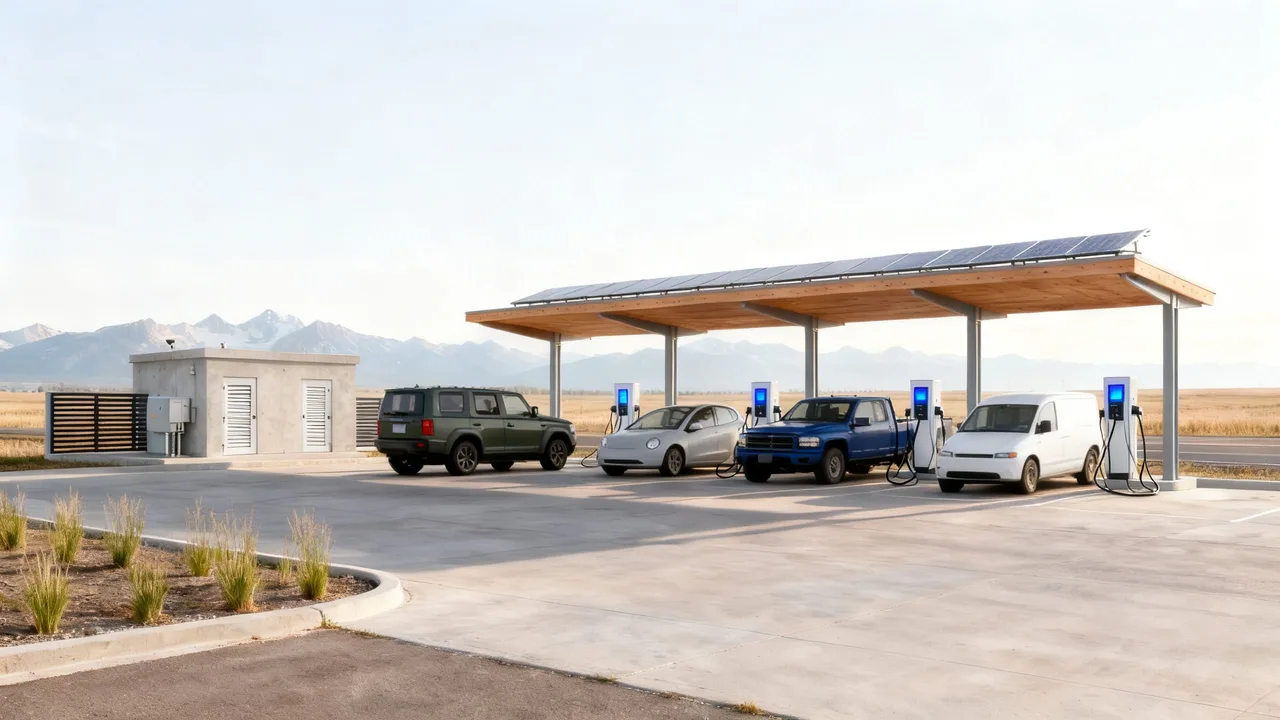
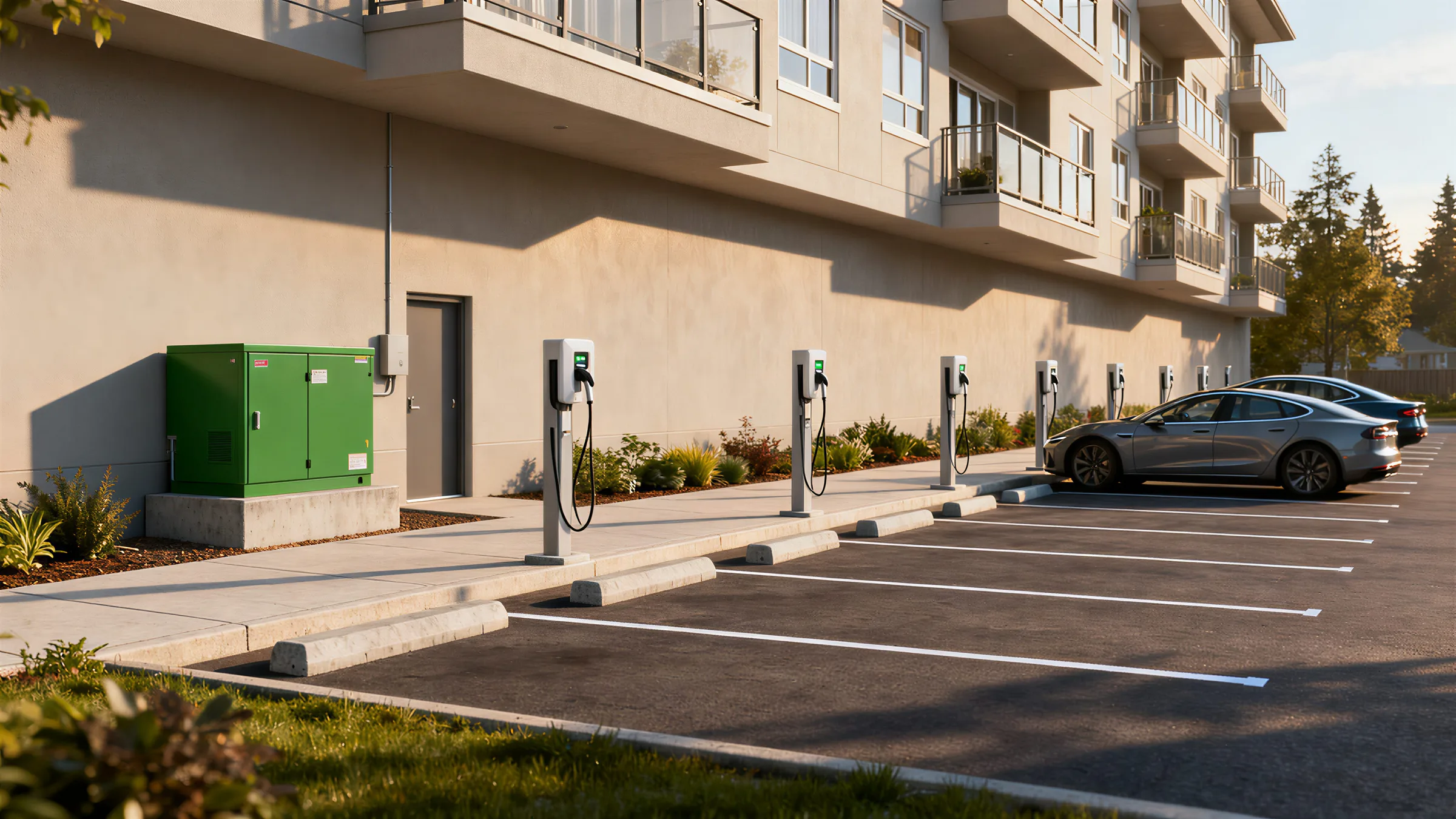
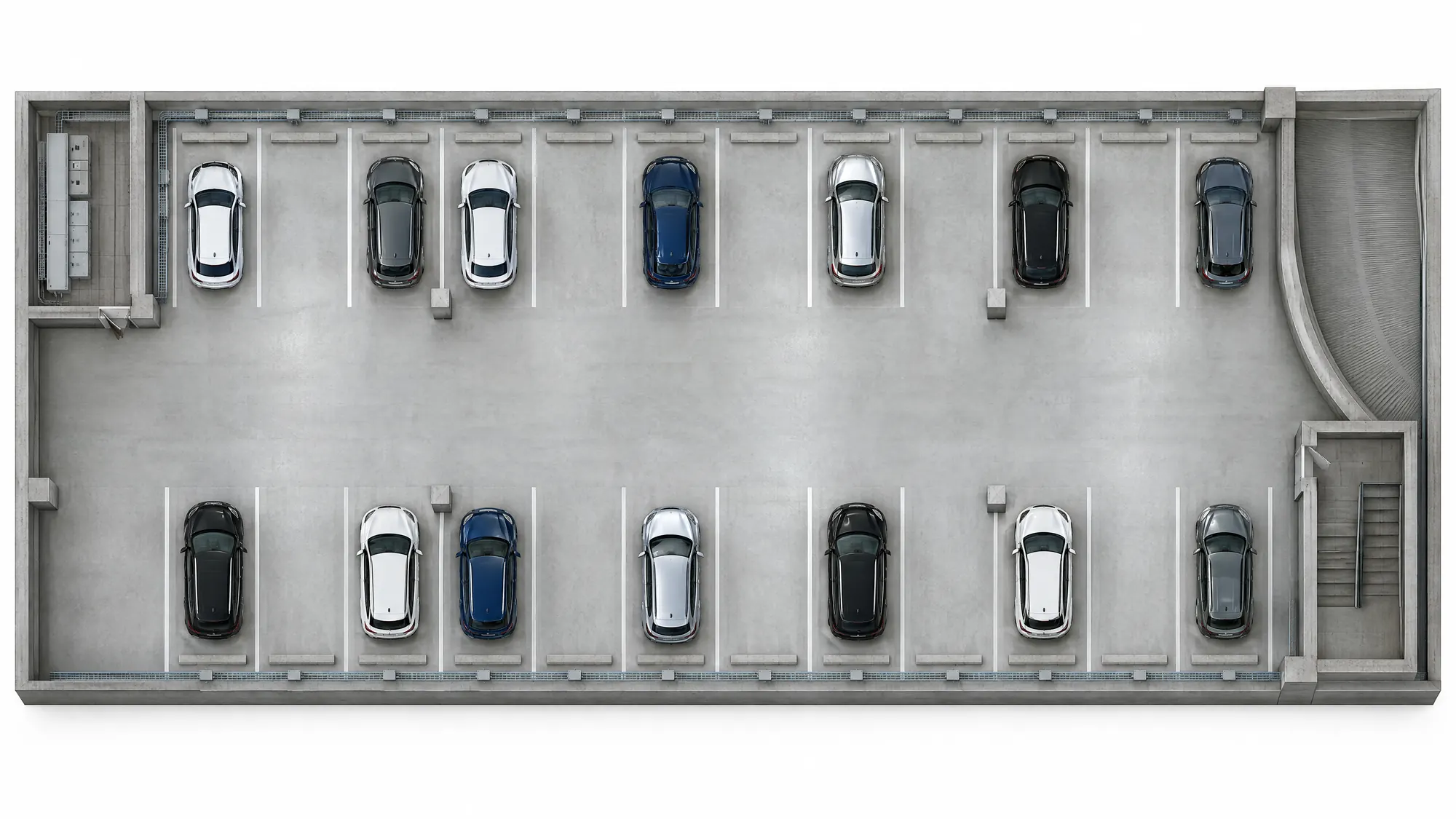
Conduit and cable routes through the parkade, charger mounting and protection, and—for surface lots—trenching, drainage and bollards, coordinated with the structure and the site.
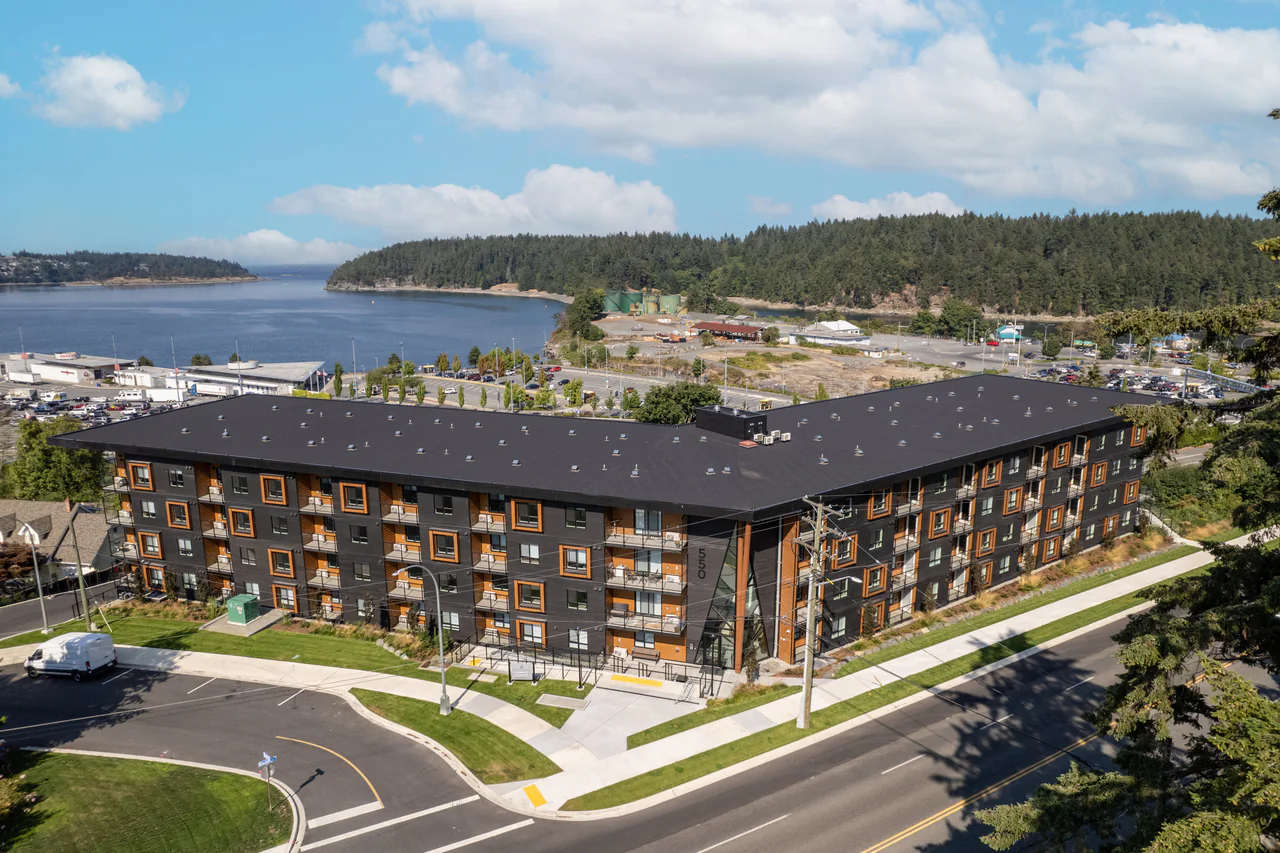
The Regatta’s secure underground parking includes EV charging stations. The Regatta ↗
Ready for what’s next
Stalls left EV-ready—with conduit, space and capacity in place—turn tomorrow’s charger into a simple connection. Some municipalities now require it for new residential parking.
- EV-ready stalls
- Reserved capacity
- Phased expansion