

.webp)







Land Development
Land Development Engineering from Acquisition Due Diligence to Final Acceptance
Land Development Is Where Engineering Decides Whether the Project Happens
Land development is the phase where most projects quietly succeed or quietly fail. By the time a land-development engineer finishes a site, the project's servicing capacity, grading feasibility, stormwater strategy, access configuration, and municipal approval pathway are either secured or in jeopardy. The design of the buildings above is irrelevant if the engineering below can't support them.
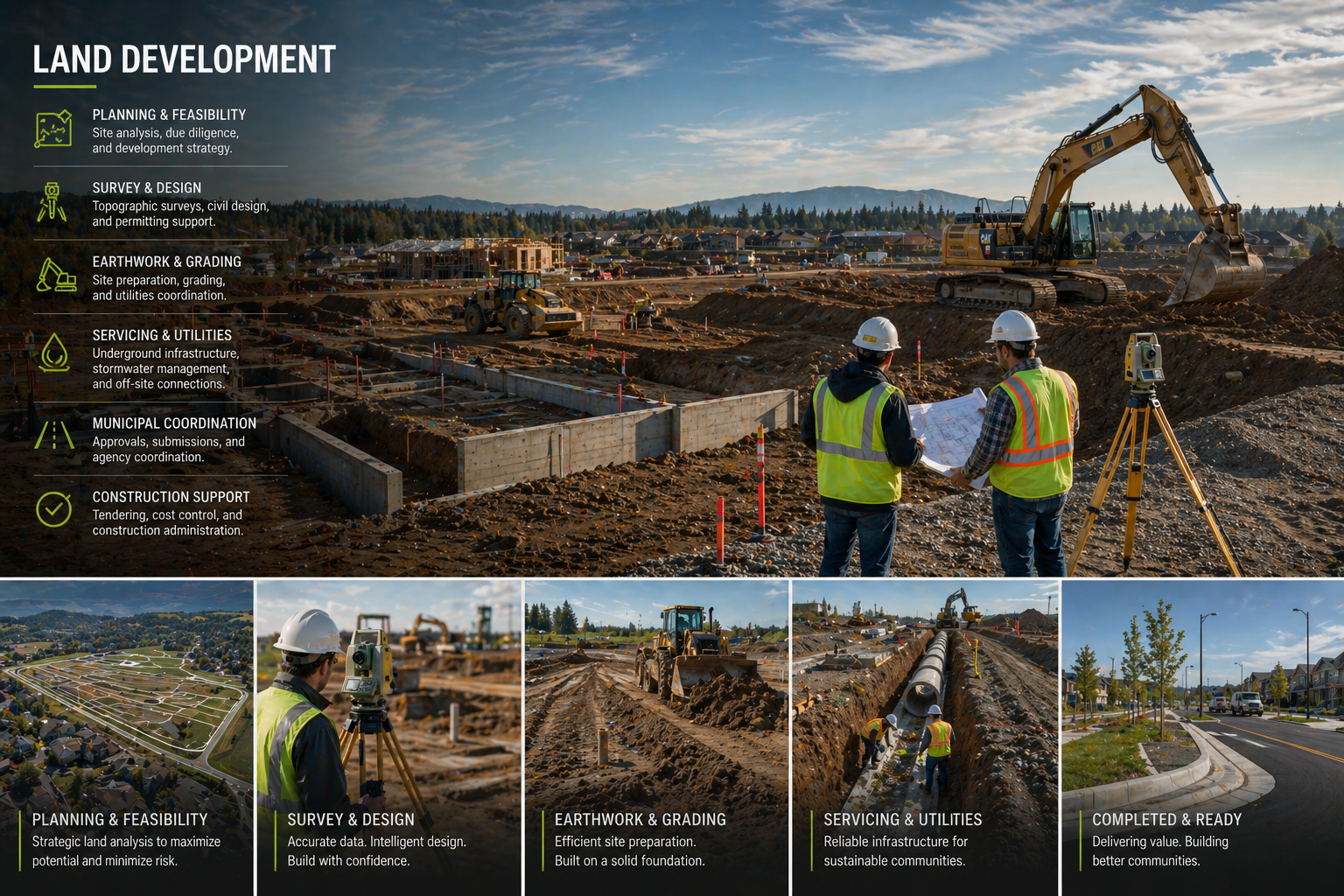
DWE's land-development practice covers the full lifecycle, acquisition due diligence, feasibility, concept, preliminary design, detailed design, rezoning and Official Plan amendment support, servicing and grading design, municipal approvals, construction administration, and CCC/FAC close-out. We work on residential subdivisions, commercial and industrial sites, mixed-use developments, and institutional campuses across our Canadian operating jurisdictions.
Due Diligence Before the Offer
The most valuable land development engineering occurs before a client owns the land. Preliminary grading, feasibility of servicing, cut-and-fill analysis, and site-access review can surface dealbreakers: geotechnical conditions that make slab-on-grade uneconomic, servicing capacity that would require municipal capital the project can't finance, or transportation access conflicts that will stall rezoning for years. Our due diligence engineering is scoped to the offer-to-purchase timeline and priced for the go/no-go decision, not for a full design fee.
Rezoning, Official Plan Amendment, and Municipal Approvals
Getting the engineering right in the rezoning and OPA phases saves 6 to 18 months on the overall schedule. We work with planners, transportation engineers, and municipal staff to front-load the servicing feasibility confirmation, the traffic-impact commentary, and the stormwater-strategy outline that the rezoning application needs, so the hearing happens on time and the conditions of approval don't reopen scope that had already been agreed.
Servicing, Grading, and Stormwater
Detailed servicing, grading, and stormwater design is the technical core of land-development engineering, and it's where DWE's integration across disciplines matters most. Our civil team designs the sanitary, storm, and water infrastructure; our electrical team handles primary and secondary power distribution; our structural team supports retaining walls, pump-station structures, and specialty civil structures; and where the land-development project is feeding an eventual building engagement, all of that infrastructure is designed with the building's actual service demand in mind, not a generic placeholder.
Construction Administration and Municipal Acceptance
Land-development construction administration is a scheduling discipline as much as an engineering one. The CCC and FAC acceptance pathway varies significantly by municipality, and the sequence of inspection, deficiency resolution, and formal acceptance can stretch for months after substantial completion. Our construction administration workflow is calibrated to the specific jurisdiction; we know which authorities require which documentation at which stage, and we manage the file accordingly.
Engaged at Master Plan, Not After Approvals
For architects and planners, our civil and land development team engages at the master plan stage. Hence, grading, servicing, and stormwater logic support the urban design idea rather than undermining it later. For developers, subdivision, servicing, and stormwater packages are sized, documented, and phased to move through municipal approvals predictably, protecting cash flow and entitlement risk. For grading and site contractors, drawings match real elevations, and erosion and sediment control is installable in the field. Our engineers stay on the file through municipal certification when post-tender questions come back.
Scope of Services
- Pre-acquisition due diligence: Feasibility-level grading, servicing, cut-and-fill, and site-access analysis to inform go/no-go decisions before capital is committed.
- Feasibility studies: Full feasibility-phase engineering to support rezoning, Official Plan amendment, and investor-facing pro-forma development.
- Rezoning application engineering: Civil engineering input to rezoning applications, including servicing confirmation, stormwater-strategy outline, and access-and-traffic commentary.
- Official Plan amendment support: Technical servicing analysis supporting OPA and similar municipal-planning-document amendment processes.
- Site plan approval engineering: Full civil engineering packages for municipal site-plan-approval processes, integrated with architectural, landscape, and traffic consultants.
- Subdivision engineering: Complete civil design for residential, commercial, and industrial subdivisions, including lot configuration coordination with the planning team.
- Sanitary sewer servicing: Gravity, forcemain, and pump-station design for subdivision-scale sanitary infrastructure.
- Storm sewer and stormwater management: Storm conveyance, quantity-control, and quality-control design to municipal release-rate and low-impact-development criteria.
- Watermain servicing: Municipal watermain design, hydraulic modelling, and coordination with the local water-supply authority.
- Site grading design: Rough and detailed grading, with accessibility, erosion, and cut-fill optimization.
- Erosion and sediment control: ESC plans, construction-sequencing, and inspection regimes to protect regulated waterways and adjacent properties.
- Offsite engineering: Water, sewer, storm, and roadway infrastructure outside the property line, including municipal approval workflow and offsite-agreement support.
- Traffic-impact analysis coordination: Project lead coordination with traffic consultants for projects that trigger formal traffic-impact-study requirements.
- Transportation-authority coordination: Driveway permits, intersection-design approvals, and access-management coordination with provincial transportation authorities.
- Construction administration: Site reviews, shop-drawing reviews, payment-certificate recommendations, and deficiency logs through substantial performance.
- CCC and FAC close-out: Construction Completion Certificate and Final Acceptance Certificate documentation, deficiency resolution, and municipal-acceptance coordination.
- Primary and secondary electrical distribution: Subdivision-scale electrical distribution design, coordinated with the civil servicing and the local distribution utility.
- Integration with building engineering: Where the land-development project feeds an eventual building mandate, servicing is sized to the actual expected demand rather than a generic placeholder.
Featured Projects

Town Of Balgonie – Asset Management Plan
.webp)
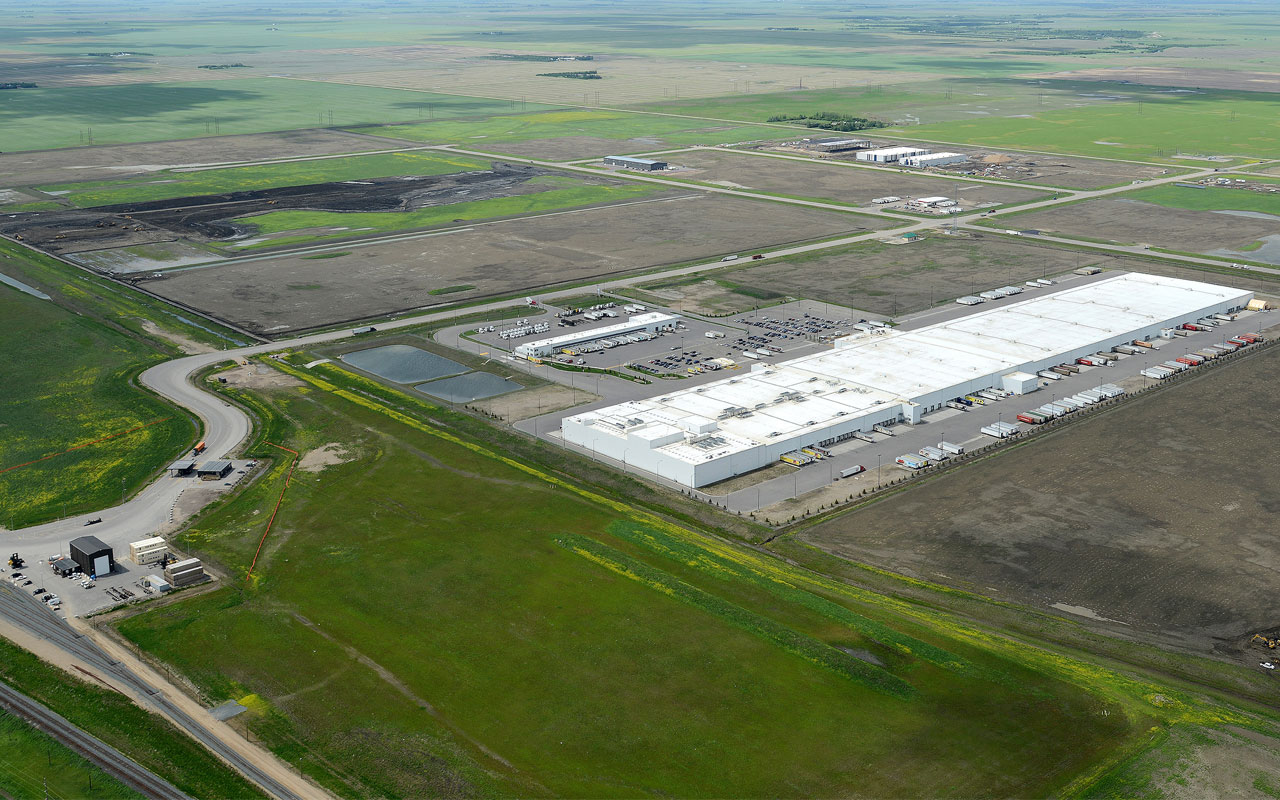
Global Transportation Hub (GTH) – Roadway Projects

Town of St. Brieux – Asset Management Plan