

.webp)






Modular Design
Modular Design that Manufactures Like a Product and Installs Like a Building
Modular Construction is Not a Style. It's a Manufacturing Strategy
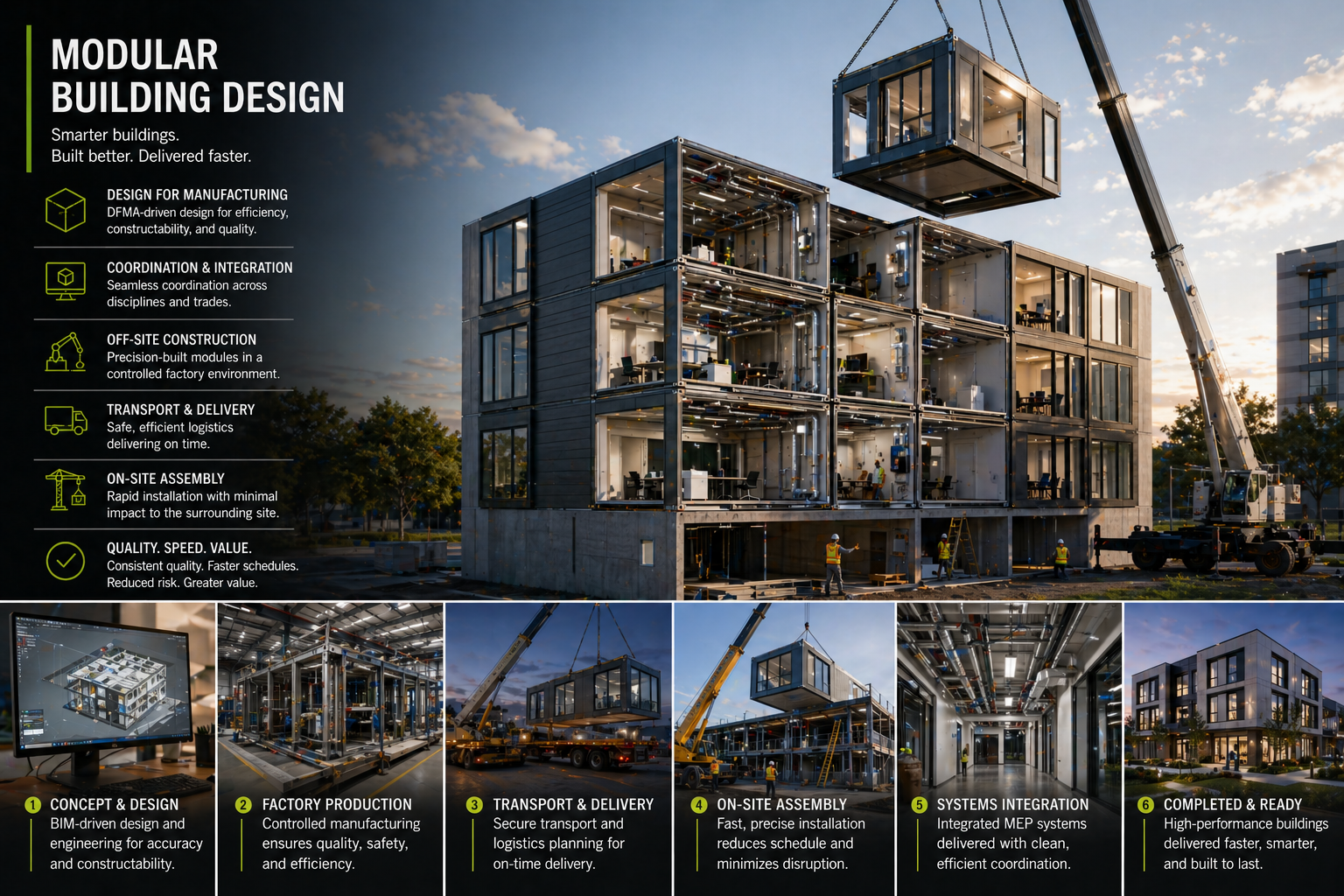
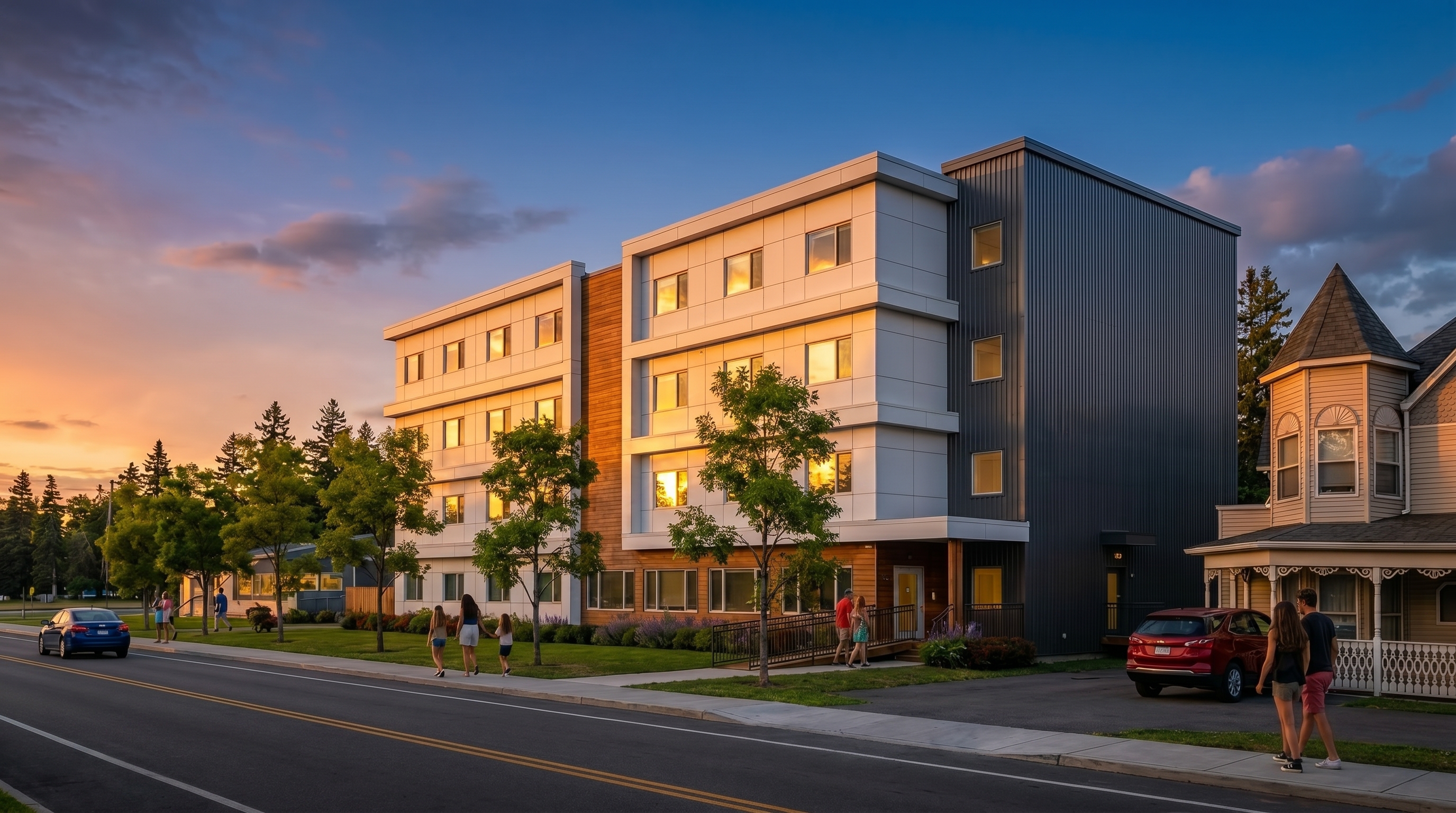
Modular construction is not a design aesthetic. It's a manufacturing strategy that moves work from the site to a controlled factory environment, compresses the schedule by running foundation and module fabrication in parallel, and trades certain design freedoms for better quality control and shorter on-site exposure. When modular is the right answer, it's the right answer decisively; schedules can be shortened by months, site disruption can be cut in half, and interior finish quality can outperform stick-built equivalents because the factory never gets rained on.
When modular is the wrong answer, it's wrong for specific and diagnosable reasons: the site is too constrained for crane access, the program has too many unique modules to gain factory economy, or the transport distance eats the saved labour. Part of our job is to help clients tell the difference. DWE designs modular projects across the range, volumetric, panelized, and hybrid, and we say no when modular isn't the right fit for a particular site.
Design for Transport, Design for Lift, Design for Assembly
The hardest part of modular engineering is designing for three different load cases that stick-built projects never have to consider: the transport case (dynamic loads on a truck over public roads), the lifting case (single-point or multi-point crane pick, often in awkward geometry), and the assembly case (temporary support, connection alignment, and module-to-module tolerance stacking). Our structural team designs modules for all three, and our transport and lifting engineering scopes explicitly include route surveys, rigging plans, and connection alignment tolerances, not just a generic 'modules will be lifted by others' note.
Mechanical, Electrical, and Fire Protection in a Module
Modular mechanical, electrical, and fire-protection design is fundamentally different from site-built. Every system has to be routed, tested, and commissioned inside the module at the factory, with coordinated module-to-module connections that will be made up in minutes on site. Risers, cross-module plumbing, and electrical feeders have to be designed so the field connection is dumb and fast. Our modular MEP designs are built around factory fabrication from the first drawing, which is why our modules arrive on site ready to be assembled, not reworked.
Code Compliance and Modular Certification
Modular buildings in Canada must meet the same National Building Code and provincial code requirements as site-built buildings, but the certification pathway differs. Most provinces require CSA A277 factory certification for volumetric modules, along with a modular-specific design and construction plan. We routinely work within the CSA A277 framework and coordinate the design documentation, inspection regime, and site-approval sequence with the AHJ from the start of the project.
Modular Engineered Around Your Project, Not Its Prescribed Modules
For architects, modular engineering is coordinated to your massing, stacking logic, and unit-module strategy, not prescribed modules you then have to accommodate. For developers, the schedule and cost certainty come from a multidisciplinary team that has designed modular systems together many times: repeatability rather than first-time risk. For modular manufacturers, site GCs, and design-build teams, MEP and fire protection packages are factory-buildable, site joints are designed with real tolerances, and our engineers will spend time on the manufacturing line when detailing becomes specific.
Scope of Services
- Modular structural design: Structural framing for volumetric and panelized modules, including transport dynamic-load analysis, crane-lift and rigging design, module-to-module connection design, and site-assembly sequencing.
- Modular mechanical design: HVAC, plumbing, and specialty mechanical design for factory fabrication, with cross-module connection strategies, riser coordination, and on-site make-up engineering.
- Modular electrical design: Branch-circuit layouts, panel feeds, modular power distribution, and cross-module feeder coordination, designed for factory rough-in and site make-up.
- Modular fire protection design: Sprinkler head layouts, cross-module piping, and fire-alarm-device placement compatible with module-to-module field connection and CSA A277 certification.
- Code analysis and CSA A277 compliance: Full code review for the applicable building code, coordination of CSA A277 factory-certification documentation, and AHJ submission management.
- Transport and logistics engineering: Module transport dynamic-load analysis, route-and-permit review for oversize loads, and rigging-plan engineering for crane lifts on constrained sites.
- Module-to-module connection design: Structural connection detailing and MEP service connection design at the module interface, with tolerances that survive factory-to-site deviation.
- Foundation and site-assembly design: Cast-in-place and prefabricated foundations coordinated with module placement, with tolerance analysis for level, alignment, and anchor placement.
- Medical gas and specialty mechanical for modular healthcare: CSA Z7396-compliant medical-gas distribution design for modular healthcare modules, including factory test protocols and site commissioning.
- Fire ratings at modular joints: Fire-rated assembly design at module-to-module joints, including continuity of rated assemblies through cavity and sealant detailing.
- Utility connection and service integration: Design of site-to-module water, sewer, gas, electrical, and communications connections, with coordination for a fast on-site make-up.
- Multi-discipline construction documentation: Complete structural, mechanical, electrical, and fire-protection documentation formatted for factory fabrication rather than generic site construction.
- Factory shop drawing review: Review of manufacturer-prepared shop drawings against design intent, with non-conformance tracking and correction documentation.
- Factory inspection and QA support: Site visits to the fabrication facility for in-progress and final inspection, coordinated with third-party CSA A277 inspection regimes.
- Site installation support: Construction administration during module placement and site-to-module make-up, with deficiency tracking and substantial-performance sign-off.
Featured Projects

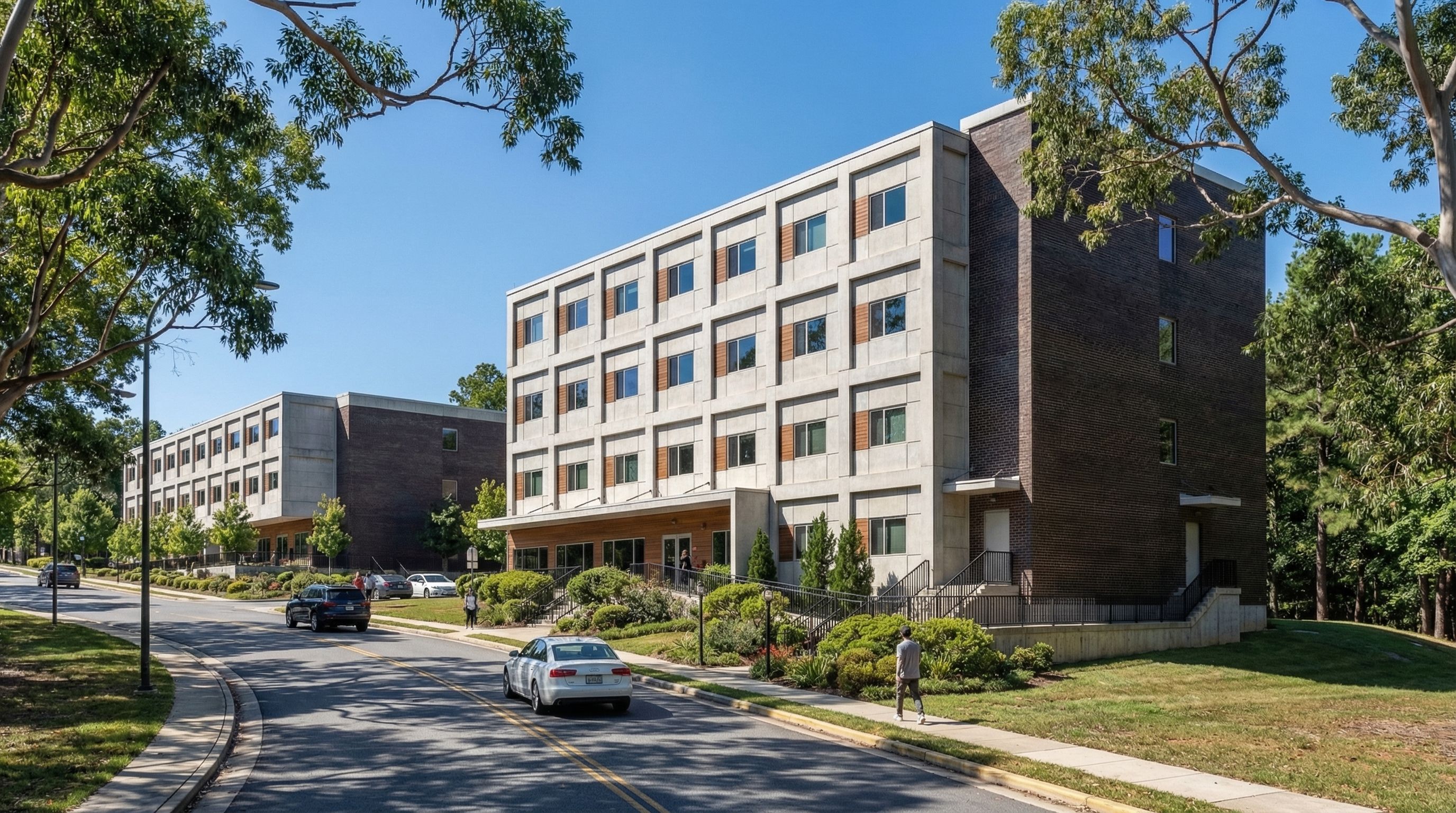
Coast Mountain College Student Housing
.webp)
BC Housing Burnaby
BC Housing Hope