
.webp)





How We Work
A structured process, not an improvised one.
Every project is different. Our process isn't. It's a structured sequence that keeps communication clear, decisions documented, and the work moving. Here's what a project with Design Works Engineering actually looks like, from first conversation to final sign-off.
01
Discovery & Scoping
Before we draw anything, we listen. We sit down with you and your team to understand the project's goals, constraints, budget, and timeline — and we ask the questions you might not have thought of yet. A well-scoped project is the difference between a smooth delivery and a costly change order.
02
Due Diligence & Site Review
We don't design until we understand the constraint set. That means reviewing existing drawings, assessing site conditions, confirming applicable codes and authorities having jurisdiction, and flagging anything that could affect the project downstream. Surprises are expensive. We do the legwork up front so you don't pay for them later.
03
Schematic Design
This is where the project takes shape. We develop the engineering concepts and layouts that establish the overall approach — systems, structure, scope. We walk you through the options, explain the trade-offs, and lock in alignment before we go deeper.
04
Design Development
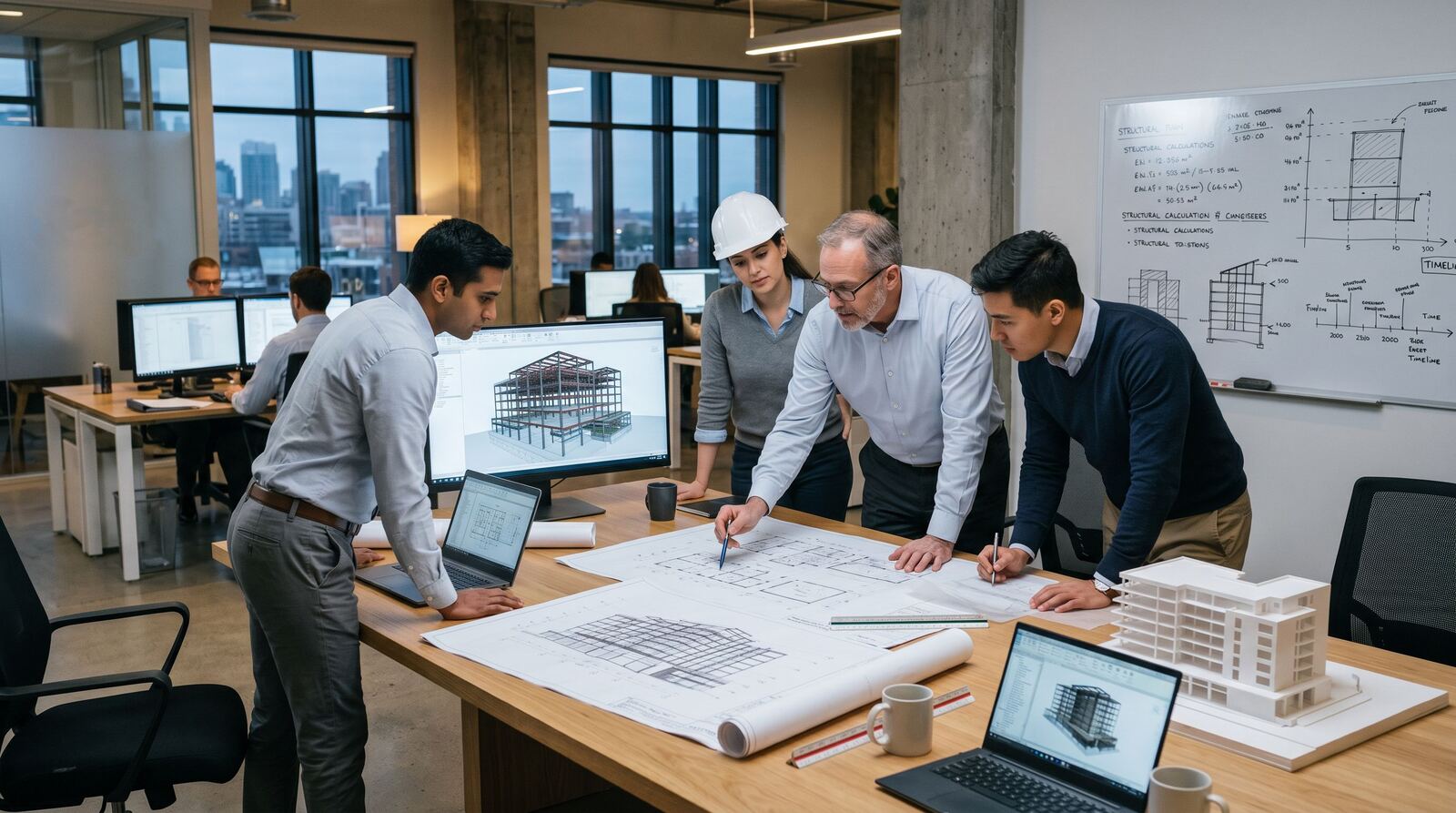
With the direction set, we build out the full engineering design. Structural, mechanical, electrical, civil, and fire protection work in coordination — not in silos. This is where decisions get finalized and the details get right. You'll know exactly what you're getting before a shovel hits the ground.
05
Coordination & Clash Detection
The most common source of cost overruns is trades conflicting in the field. We use BIM coordination and clash detection to find and resolve conflicts between systems before construction starts — not after. A clash resolved on screen costs a fraction of a clash resolved on site.
06
Construction Administration
Our job doesn't end when drawings are issued. We stay engaged through construction — reviewing shop drawings, responding to RFIs, visiting site, and confirming that what gets built matches what was designed. The engineer of record actively involved during construction is one of the most valuable things you can have in your corner.
07
Post-Construction Support
When the project wraps, we don't disappear. We run a post-construction review to confirm performance against design intent, close out deficiencies, and verify that building systems are operating as designed. A proper closeout protects the investment for the life of the building.
08
Feedback & Follow-Through
We ask for honest feedback after every project — and we use it. The process evolves because clients tell us what worked and what didn't. If you've worked with us before, some of what you experienced on the last project was already shaped by feedback from the one before.