

.webp)







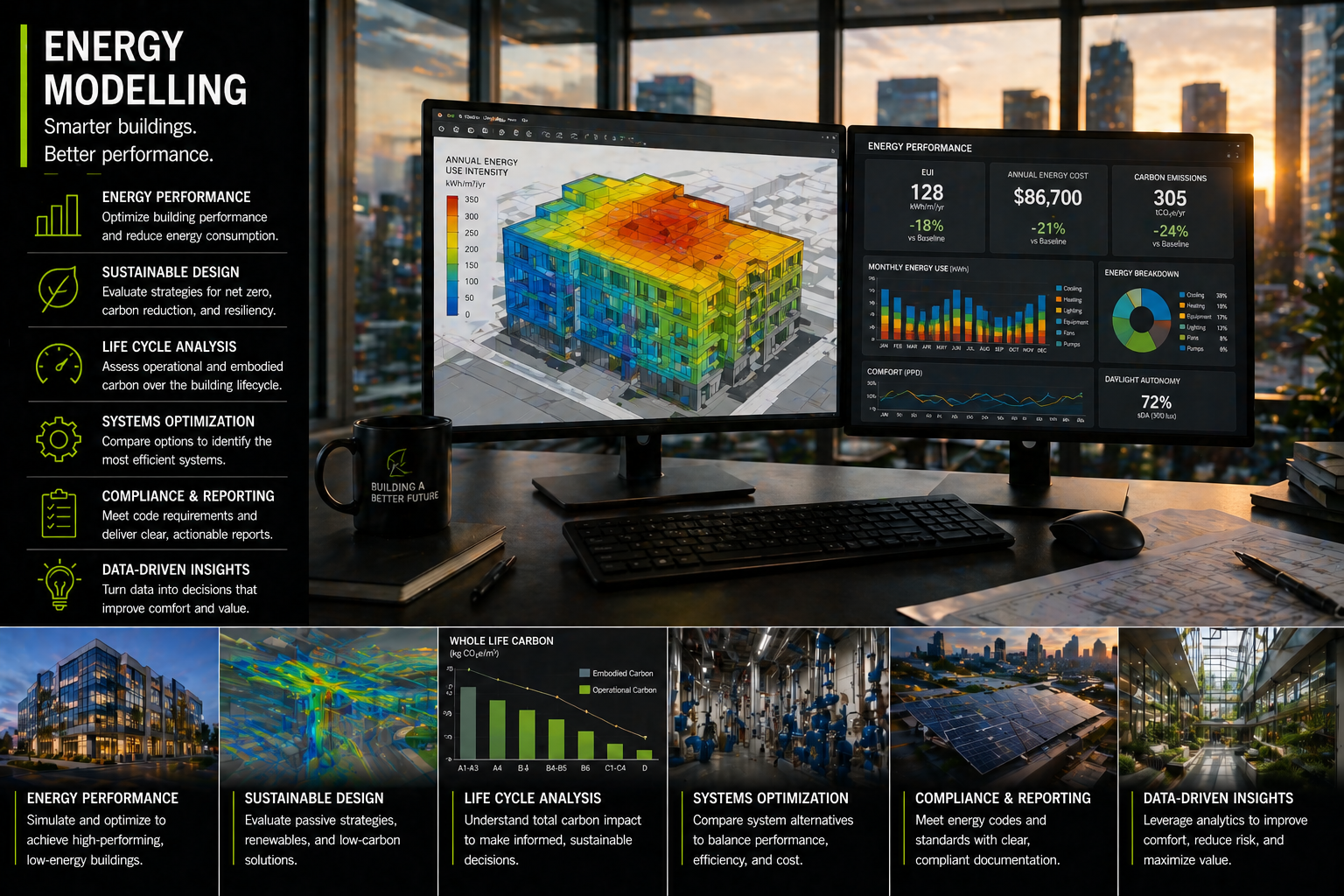
Energy Modelling
Energy Modelling that Changes Design Decisions, Not Just Documentation
Modelling is Only Useful if it Changes a Decision.
Most energy models are built in the last four weeks of design development to confirm a certification result or meet a code submittal requirement. At that point, the model is documentation. The envelope decisions, HVAC system selection, glazing ratios, and renewable contributions are already locked. The model can tell you what you built; it can't help you build something different.
Our energy modelling team works the opposite way. We get involved at the concept and design stages, sometimes even at feasibility, and run parallel scenario models while the design is still fluid. That's when modelling is actually useful: when the mechanical engineer is comparing heat-pump variants, when the architect is weighing glazing ratios, when the owner is deciding between Zero Carbon and NECB performance-path targets. A two-day model run at that stage is worth more than a perfectly accurate model built at ninety percent submission.
One Model, Multiple Outputs: Compliance, Certification, and Finance
A modern Canadian building routinely has to satisfy three different modelling audiences: the building official, who wants NECB or ASHRAE 90.1 compliance documented the way the local step code requires; the certification body, who wants LEED, Zero Carbon, or Passive House performance modelled using their specific workbook and reference-building methodology; and the lender or funder, who wants CMHC MLI Select, CMHC MLI Flex, or utility-program documentation in the format their programs accept.
These three audiences want overlapping but differently formatted outputs from what is fundamentally the same physics problem. We run them from a single base model so the numbers reconcile, the assumptions are consistent, and the client isn't paying three separate modelling mandates.
Daylight, Glare, Shadow, and Thermal Comfort
Energy modelling used to mean one number: annual kWh per square metre. Modern performance modelling reaches further. Daylight and glare analysis determines how much artificial lighting a space actually needs on a typical day and whether occupants will pull the blinds on a cold winter afternoon (defeating the passive solar gain the model assumed). Shadow analysis protects neighbour solar access and certification credits. Thermal-comfort modelling (PMV/PPD) tests whether the HVAC system keeps occupants comfortable in complex geometry where simple thermostat control won't. All four are part of our standard performance-modelling scope.
CMHC MLI Select and MLI Flex
For multi-family and rental developers in Canada, CMHC's MLI Select and MLI Flex programs are the single biggest under-utilized financial incentive in the market. They offer meaningful preferential mortgage insurance terms, longer amortizations, and reduced premiums in exchange for documented energy performance improvements relative to reference-building baselines. The modelling requirements are real but achievable. We produce the full energy-performance documentation required to qualify, and we do it early enough in design to let the owner tune the performance target to the financial outcome they're actually after.
Modelling That Arrives When Your Project Needs It
For architects, energy modelling fits within your design decision cadence, with envelope, glazing, and orientation iterations delivered on your schedule, so form decisions happen before they harden into commitments. For developers, models are built to the exact requirements of the financing and incentive pathways you are pursuing: CMHC MLI Select and Flex, CaGBC Zero Carbon, SMCI, LEED v4 and v4.1, and provincial utility programs, with outputs that the lender, program manager, and owner's engineer each need. For mechanical, envelope, and design-build teams, modelling substantiates equipment selections, assembly specifications, and substitution requests so the code official, commissioning agent, or owner's rep approves the first submission.
Scope of Services
- NECB compliance energy modelling: Performance-path modelling against the National Energy Code for Buildings, with documentation formatted to the AHJ's submission requirements.
- ASHRAE 90.1 compliance modelling: Performance-rating-method modelling against ASHRAE 90.1 for projects using the standard directly or referenced through LEED and other certifications.
- Step-code modelling: Municipal step-code compliance modelling. BC Energy Step Code, Toronto Green Standard, and other jurisdiction-specific performance frameworks, with staged-target strategy support.
- LEED energy modelling: Optimize-Energy-Performance modelling for LEED v4 and v4.1 certification submissions, including weighted-factor, cost-based, and GHG-based performance paths.
- Zero Carbon Building Standard modelling: Zero-carbon-balance modelling, embodied-carbon coordination, and submission documentation for ZCB-Design and ZCB-Performance certification.
- Passive House modelling: PHPP and WUFI-Passive performance modelling for projects pursuing PHI or PHIUS certification, including space-heating-demand, airtightness, and primary-energy documentation.
- CMHC MLI Select and MLI Flex documentation: Energy-performance modelling and reporting packages for CMHC's preferential-mortgage-insurance programs, developed early enough to tune performance targets to financial outcomes.
- Utility-program incentive documentation: SaskPower, Efficiency Alberta, Save on Energy (IESO), and Canada Greener Homes documentation, with modelling that supports approval rather than triggers follow-up questions.
- Net Zero feasibility modelling: Scenario modelling from current design to Net Zero Energy, Net Zero Carbon, or Net Zero Ready, with cost-per-tonne-saved and staged capital analysis.
- Building Assessment Reports. ASHRAE Level 1, 2, and 3: Walkthrough, diagnostic, and investment-grade energy audits of existing buildings, with quantified ECM recommendations and financial payback.
- Daylight analysis: Annual daylight-autonomy, spatial-daylight-autonomy, and point-in-time illuminance modelling for performance and certification, with glazing, shading, and orientation recommendations fed back to the design team.
- Glare analysis: Annual glare probability, discomfort-glare, and annual-sunlight-exposure modelling, calibrated to certification credit requirements and occupant comfort.
- Shadow analysis: Site-specific shading studies for zoning approval, neighbour solar-access protection, and certification shading credits.
- Thermal-comfort analysis: PMV / PPD and CFD-assisted airflow modelling to verify occupant comfort in complex, high-glazing, or open-plan spaces.
- Whole-building life cycle assessment (LCA): Cradle-to-grave embodied-carbon analysis on structure and envelope, coordinated with the structural team's material selection.
- Benchmarking and utility-data analysis: Interval-data and monthly-billing analysis for portfolio benchmarking, retrocommissioning prioritization, and capital planning.
- Measurement and verification (M&V): Post-occupancy M&V to close the gap between modelled and actual performance, critical for incentive programs and owner assurance.
Featured Projects

4 Mile Corner Plaza
.webp)
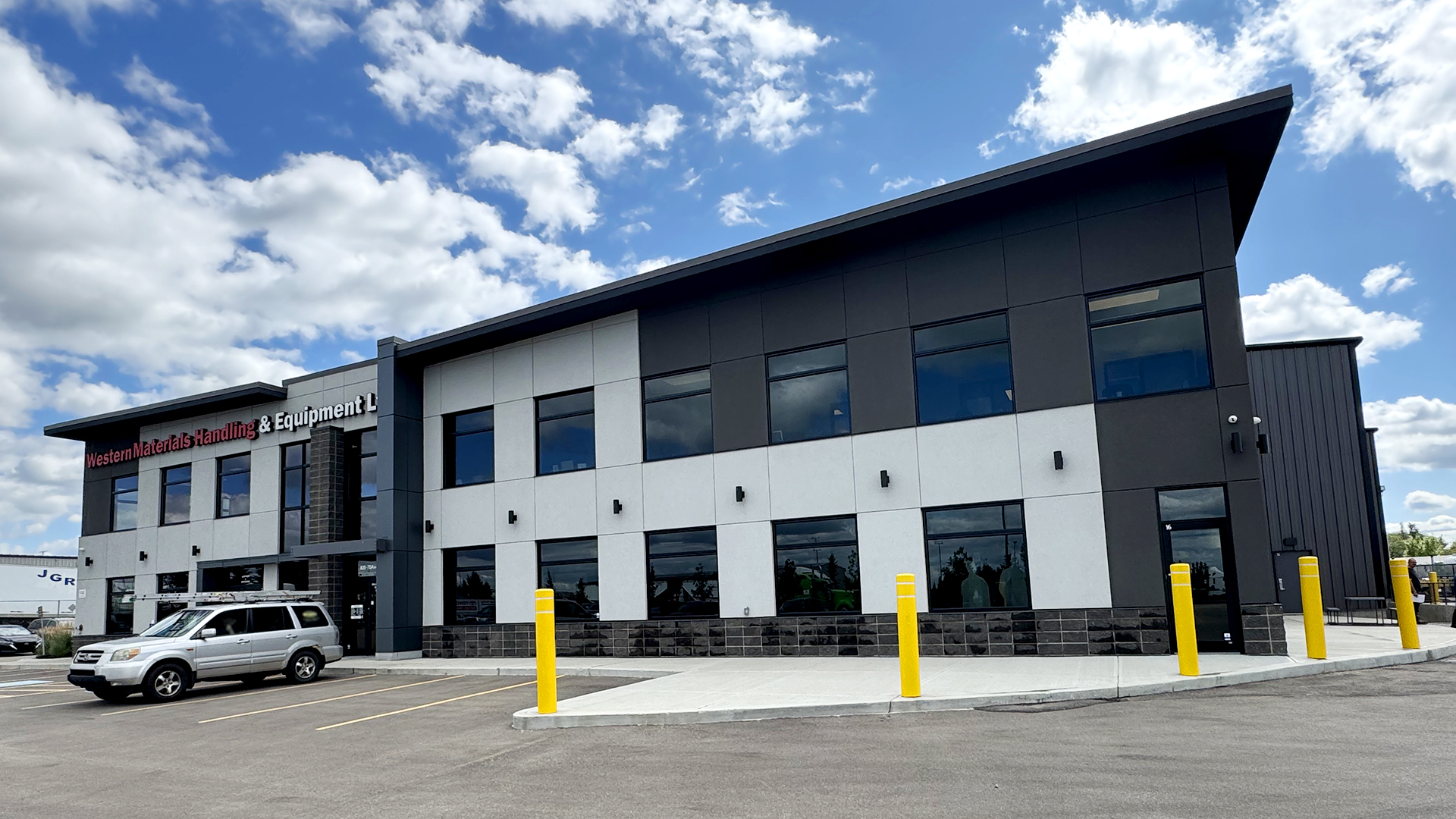
Western Materials Handling
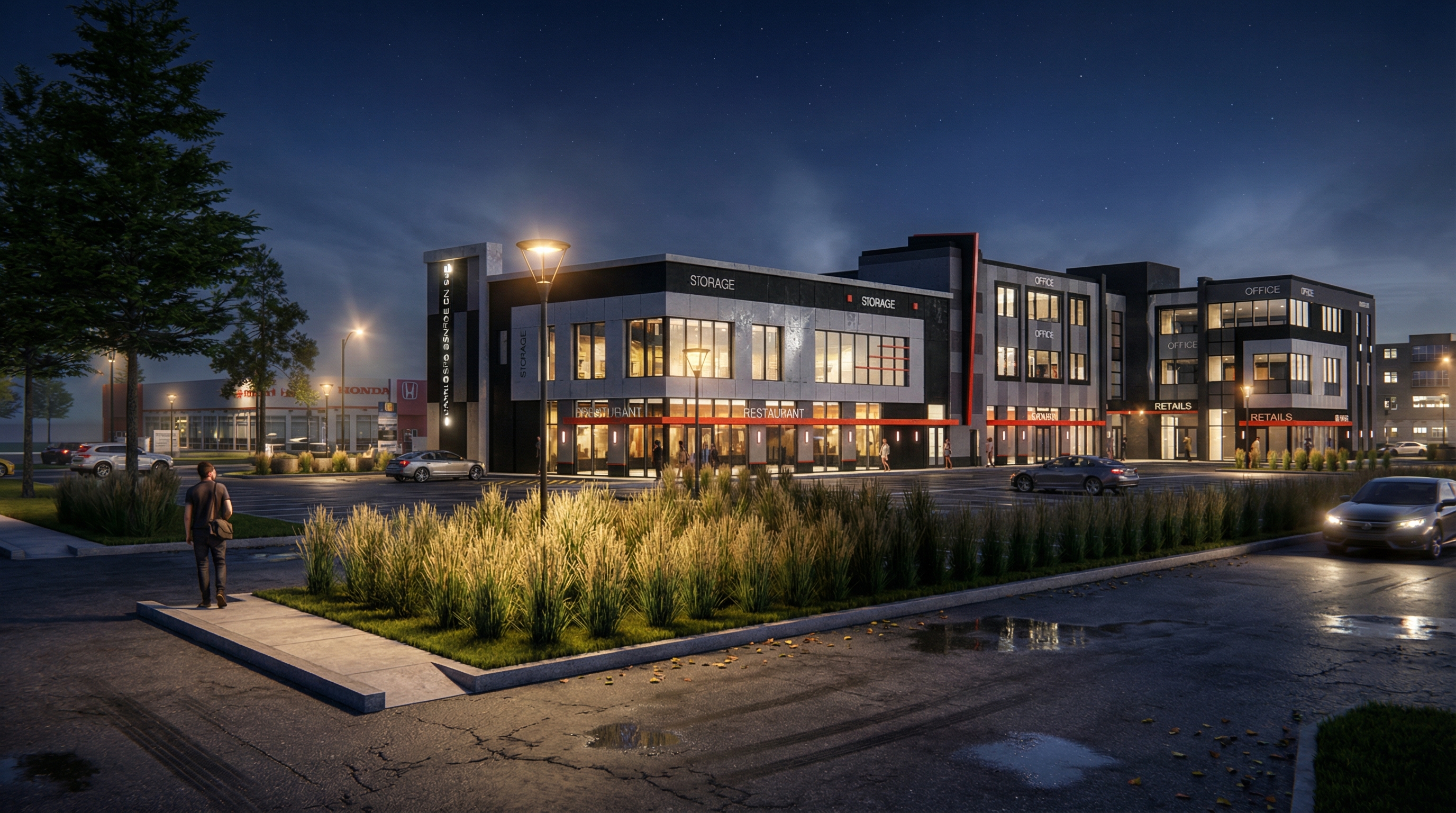
Maxworth Centre